Build in Public Highlight: ibuildinpublic and the Context Social Feeds Lose
A founder's look at ibuildinpublic, a community that connects builder identities, product pages, lessons, asks, discovery, and analytics around the work itself.
Building in Public Has a Memory Problem
Building in public usually happens in places designed to forget.
A founder shares a launch lesson, a pricing experiment, or a request for feedback. The post reaches a few people, collects some replies, and then moves down the feed. A week later, a new visitor can see the founder's latest update, but not necessarily the product behind it, the earlier experiments that shaped it, or the kind of help the founder needs now.
The work is public. The context is scattered.
ibuildinpublic is interesting because it treats that missing context as the product. Its promise is simple: “A home for people who build in public.” Underneath that line is a connected system of builder pages, product pages, experiences, help requests, follows, group chats, search, leaderboards, XP, bookmarks, and analytics.
Each feature already exists somewhere else. The more important decision is to put them around the same persistent identities: the person building and the things they are building.
That changes build in public from a stream of updates into a body of work.

Two Identities, Not One Profile
Most social networks give every person one profile and every project one temporary link in the bio. ibuildinpublic separates the builder from the product without disconnecting them.
A builder page can hold the person's bio, location, social links, stack, education, work history, personal Q&A, products, and collaboration preferences. A product page has its own pitch, website, highlights, roadmap, FAQ, demo, optional GitHub details, followers, and engagement.
That distinction matters because people and products evolve at different speeds.
A founder may work on several products over time. A product may survive a positioning change, gain collaborators, or develop its own audience. Compressing both identities into one social profile makes every visitor reconstruct the relationship from a bio and a pile of old posts.
The builder-product model makes the relationship explicit. Visitors can move from a person's work to a specific product, then back to the lessons and requests connected to that builder. The product is not merely a URL attached to a personality. The builder is not reduced to the current launch.
I have not used the platform hands-on, so this is not a review of the member experience or the quality of every interaction. This highlight is based on the public landing page, profiles, product pages, and FAQ. What interests me is the information architecture: ibuildinpublic is trying to preserve the shape of the work, not only the conversation around it.
Experiences Turn Updates Into Reusable Knowledge
The platform's Experiences format is a small but important constraint.
When a builder publishes one, they choose a category such as How to/Guide, What worked, What failed, or Lesson learned. The category gives the title a starting phrase, and the builder adds the specific result and a richer explanation.
This produces a different object from a normal status update.
“Working on pricing today” is activity. “Raised prices twice and churn stayed flat after repositioning” is an experience. The second version contains a decision, an outcome, and enough tension to help another founder decide whether the lesson is relevant.
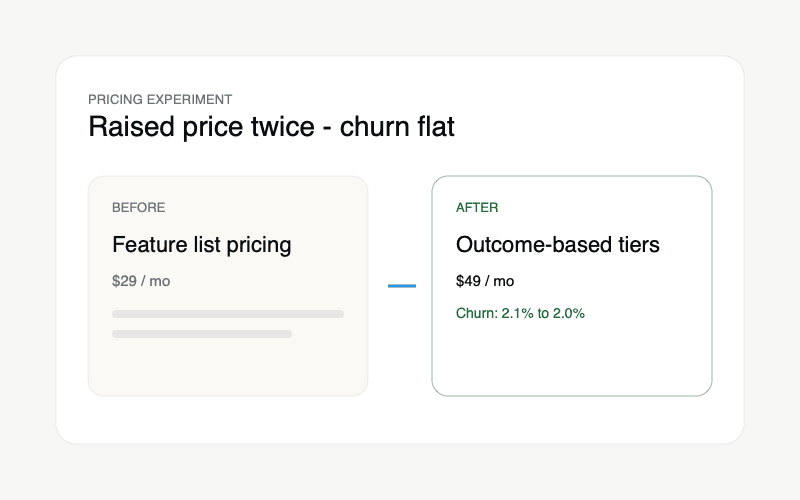
Categories also make failure easier to discover on purpose. In a generic feed, polished launches and confident claims tend to outperform careful postmortems. A dedicated What failed format tells the community that a failed Product Hunt launch or a pricing mistake belongs in the knowledge base, not only in a private conversation.
That is one of the healthiest product decisions in the platform. Building in public becomes more useful when the unit of value is not “an impressive update.” It is a documented attempt that gives the next builder a better starting point.
The product lesson: If you want a community to produce useful knowledge, design the publishing format around decisions and outcomes instead of hoping every user invents that structure alone.
Help Is Part of the Public Record
Founders do not only have lessons to share. They have unresolved problems.
ibuildinpublic gives those needs two clearer surfaces. Community asks let builders request help in the feed. Involvement options live on builder and product pages and state what kind of collaboration is welcome: beta testers, user interviews, UX feedback, early paying customers, referral partners, launch supporters, SEO help, or user-generated content.
The public product page for ibuildinpublic itself uses this system. It lists several concrete needs, from user interviews and UX feedback to referral partners and launch-day support.
This is more useful than a generic “DMs open.”
A cold message creates work for both sides. The visitor has to guess what would be useful, and the founder has to decide whether the request fits the current stage. Structured involvement options move that qualification earlier. They turn “I would like to help” into “I can help with the thing you have already said you need.”
There is also a deeper community lesson here. Many networks optimize for broadcasting because posts are easy to count. But a founder community becomes valuable when it also reduces the cost of asking. Making needs visible beside the product gives collaboration a place in the product model, rather than leaving it as an accidental result of engagement.
Discovery Needs More Than a Feed
A chronological feed is good at answering one question: what was posted recently?
It is much worse at answering the questions founders actually bring to a community:
- Who is building in the same category as me?
- Which products are actively looking for testers?
- Has anyone documented a similar pricing change?
- Which builders consistently help other people?
- What is receiving attention this week rather than all time?
ibuildinpublic layers several discovery systems around those questions. Builders and products have browsable hubs. Search covers builders, products, experiences, and asks, including meaning-based matching rather than only exact keywords. Public leaderboards show XP, builders, products, and pages across different time windows. Follows and bookmarks let useful people, products, and lessons remain reachable after the first encounter.
No single mechanism has to carry the whole discovery problem.
That matters because discovery and popularity are not the same thing. A leaderboard can surface active people. Search can surface a precise match. A feed can surface what is new. A product page can explain the thing once someone arrives. A bookmark can preserve the relationship for later.
The strongest communities give members several ways to be found, because relevance changes with intent.
XP Makes Contribution Legible
The platform's gamification layer is called Builder XP.
Members earn XP through activities such as visiting pages, publishing, following builders and products, sending contact requests, engaging with experiences and asks, and completing daily missions. XP unlocks builder titles and feeds public leaderboards.
Gamification can easily become noise. If the cheapest action produces the most points, the system rewards visible activity instead of meaningful participation. The useful idea here is not the number itself. It is the attempt to make contribution legible across different behaviors.
A founder community needs more than authors. It needs people who read, respond, introduce, test, bookmark, and return. Those actions are normally invisible beside the person who publishes the most. An XP system can acknowledge that broader participation, provided the incentives stay resistant to repetition and low-effort farming.
This is the part of ibuildinpublic I would watch most closely as the community grows. The quality of the leaderboard will depend on whether XP remains a signal of useful involvement or becomes a game members learn to optimize separately from helping one another.
Analytics Closes the Loop
Publishing in public creates another familiar problem: the founder cannot always tell what the public work is doing.
ibuildinpublic includes analytics for builder profiles, products, experiences, and help requests, with impressions and engagement breakdowns. Page-level analytics sit in the Premium plan, alongside search, full feed filters, group chat, bookmarks, additional product pages, higher ask limits, dofollow outbound links, and a Premium badge.
The analytics layer fits the rest of the product because each public object already has a stable identity. A founder can measure the builder page separately from a product page, or compare an experience with a help request. The platform does not have to pretend that every impression means the same thing.
This connects to a theme I keep noticing in founder tools: feedback becomes useful when it is attached to the object and decision that created it. A single account-wide number may be encouraging, but it does not tell the founder whether a product pitch, lesson, or request is resonating.
The Questions I Would Watch
ibuildinpublic is solving a real structural problem, but the product becomes harder as participation grows. These are the questions I would watch:
- Can XP reward useful contribution without creating performative activity?
- Will leaderboards help discovery without concentrating attention on the same builders?
- Can structured experiences remain specific enough to be useful rather than becoming another promotional format?
- Will help requests receive enough thoughtful responses to make asking feel safe?
- Can search and categories keep working as the number of products and lessons expands?
- Does the distinction between Free and Premium support the community without hiding too much discovery behind a subscription?
- Can public pages attract relevant visitors from outside the existing member network?
These are not objections to the model. They are the tests created by its ambition. A founder directory is relatively simple. A useful builder community has to balance identity, knowledge, discovery, incentives, trust, and economic sustainability at the same time.
What I Am Taking From ibuildinpublic
The main idea I take from ibuildinpublic is that public work needs durable containers.
A post can announce what happened. A builder page can explain who is doing the work. A product page can explain what is being built. An experience can preserve the lesson. An ask can expose the current obstacle. Involvement options can make the next useful interaction obvious. Search, bookmarks, and analytics can help the value continue after the feed moves on.
That is a more complete view of building in public than “post consistently.”
The platform is also a reminder that community products become clearer when contribution is connected to intent. Builders are not always looking for applause. Sometimes they need a tester, a customer interview, a collaborator, a distribution partner, or someone who has already made the same mistake.
Social feeds are good at producing moments. ibuildinpublic is trying to turn those moments into an accumulating record of people, products, lessons, and needs.
If that record becomes easier to search and trust as it grows, the result can be more valuable than another place to post. It can become infrastructure for the work around the work.
Resources and Links
- Official site: ibuildinpublic
- Builders: Browse public builder pages
- Products: Browse products
- Experiences: Lessons shared by builders
- How the platform works: Frequently asked questions
- Creator: Ehsan on ibuildinpublic and @acadictive on X
- Related reading: Yoanna Juille highlight, StayUp highlight, and Flowsery highlight
Connect with me
Follow my journey building in public, sharing insights about development, and creating products.